

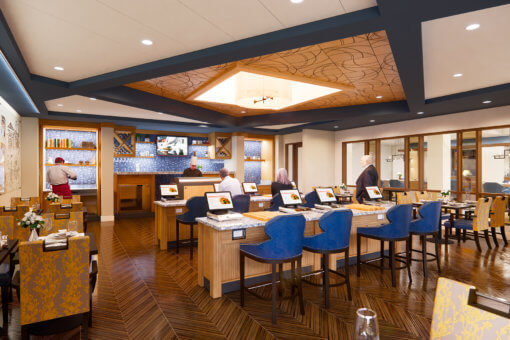
Smith Village Food Hall
Dining plays an important role in the design of senior living environments—and it always has. It supports the daily health and happiness of residents, visitors, and staff. As senior living settings progressed from an institutional atmosphere to resident-centered care environments, food preparation and floor plans have been reconsidered to make the experience more hospitality-like. In independent living environments, the large, fine dining venue has expanded to include a variety of settings to provide more options and space plan flexibility. The evolving model is influenced by food trends and hospitality settings—the best in hotel, restaurant, and retail design. Furthermore, Covid has added another layer of considerations that will continue to impact future design decisions for years to come.
Senior living providers and design teams understand the importance of dining as a marketable amenity. Especially as the industry has been preparing for the baby boomer influx and the high expectations they bring as a consumer base. Dining can be a differentiator that impacts the decision-making process when selecting a senior living community. Food quality, service level, available options, and overall design are all key considerations. Dining solutions serve as a true example of how design and operations come together to achieve success. The design of senior living environments has been advancing to elevate every level of care, and the dining experience is an ever-evolving piece of the design puzzle.
An Operational Perspective
From the location and design of the centralized kitchen and the functional capabilities of remote kitchens and service areas to the number of staff and the order/payment process, numerous operational factors impact a successful dining program.
While a fine dining restaurant experience still has its place, higher expectations are anticipated post Covid. It is predicted that residents will look for more private and personalized experiences with a high level of service. Cooking classes and other food-focused activities, both virtual and in-person, will continue to gain momentum. These all require unique space configurations, such as a teaching kitchen for classes, as well as top notch staff and planning.
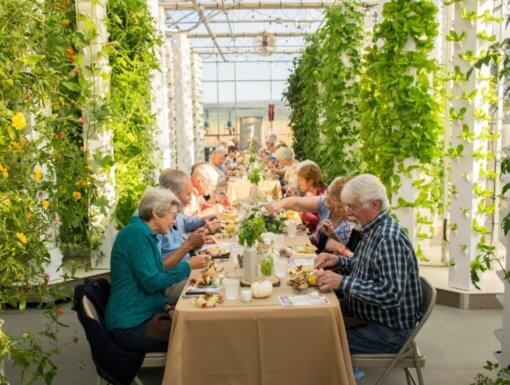 Senior living providers as well as the residents they serve also continue to have a deep interest in local food sources. People want to know what they are putting into their bodies as well as support their local community and business owners. From special farm to table dinners to planter boxes and onsite gardens, a variety of food chains are being explored.
“Providing locally-based food sources is essential in maintaining resident connections to their locale and the neighborhoods they previously resided,” says Chris Mullin, Senior Associate and Director of Interior Architecture at MDP. “It is our mission as designers to continue that connection in the architecture and interior design by using local architectural styles, materials, and visual imagery,”
As providers evaluate the real estate available to accommodate all of the dining options they want to offer as well as staffing needs, design solutions need to consider how spaces can be adapted for different uses and hours of operations. A strategic and comprehensive plan will balance options for the time of day and type of experience. Technology will continue to be leveraged to support efficient operations.
“With the industry at such a pivotal point with the boomers, the need for choice and multiple venues is the future,” says Phillip Dopson, Jr., VP, Design and Retail for Morrison Living. “However, food service design in senior living will have to continue to focus on technology to drive labor efficiencies. The current labor market shows no sign of improvement and with mandatory vaccinations upon us we will be forced to prove operational effectiveness in order to continue to build more venues.”
Designed for Success
According to Bruce Hurowitz, principal of MDP, “We have been fortunate to work with several providers and the top foodservice industry experts on the transformation of senior living dining experiences. No matter the component of care, dining is a hub of activity. We relish the opportunity to create dining environments that support healthy, active living—desirable dining destinations enjoyed by residents, staff, and visitors.”
MDP’s Inspired Design process has brought new life to projects such as a more casual approach to assisted living dining at Parker at Stonegate in Highland Park, N.J. and the award-winning comprehensive dining transformation at Friendship Village in Schaumburg, Ill. The MDP Team is currently working on a new culinary vision for Smith Senior Living at Smith Village in Chicago, Ill.
While there are special considerations at the varying levels of care, successful design solutions have the following attributes in common.
A Sense of Place
The Meadows
Parker at Stonegate
Smith Village Food Hall
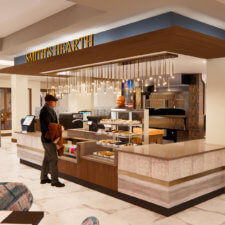
Whether a memory care household open kitchen, assisted living casual dining room, or independent living food hall, each destination needs to achieve a sense of place. While a memory care household may focus on recreating the details and warmth of a residential setting, an independent living venue may offer a boldly branded contemporary bar. The approach to the space, size of the area, architectural and design details as well as signage, lighting, art, and accessories all play a role in creating a distinct sense of place. This could be a themed experience or simple, classic design. The point is residents and guests feel a sense of arrival at a destination. They are engaged by the setting. Furthermore, the staff and level of service play a role in the experience. With communities offering a variety of dining options, the sense of place helps residents choose the type of food and atmosphere they are looking for to suit their mood and dining preference. In the care settings, where options may be more limited, the design reinforces a feeling of home and comfort or achieves an elevated experience.
Flexibility & Choice
Smith Village Food Hall
Parker at Stonegate
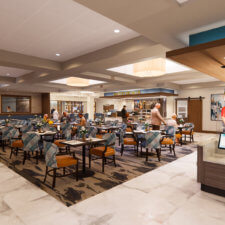
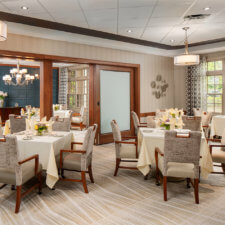
Designing with flexibility and choice enhances the health and well-being of all residents while also supporting the operational model. Thoughtful space planning and furniture selections allow areas to serve multiple purposes. A food hall setting with centralized seating allows dining companions to select different food options yet sit together. Movable partitions enable staff to expand seating areas or create more intimate settings. Coordinating furniture can support seating capacity in different venues. And a combination of banquettes, family-style tables, two-tops and four-tops allow residents to choose areas that best suit their group and comfort level. During and post-Covid, space plan flexibility has been critical. The ability to increase distances between seating groups allowed residents to maintain a sense of normalcy as room quarantines were lifted. While space planning is often about maximizing seat capacity, plan adaptability will remain a critical mindset moving forward.
A Connection to Nature
Echo Lake
Heath Village
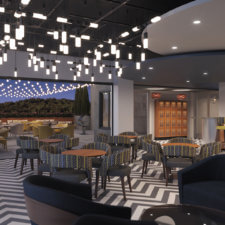
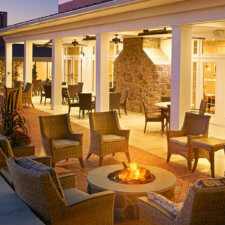
Design and architectural solutions continue to prioritize connections to the outdoors. From expansive window walls oriented towards sweeping views of the landscape or skyline to a variety of outdoor venues, access to nature is essential to resident health and well-being. Dining venues with extended patio seating, barbeque areas and outdoor bars are all ways communities continue to introduce nature into the dining experience. While this became a focal point prior to the pandemic, Covid encouraged providers and design teams to continue to explore outdoor possibilities. From the addition of heat lamps to increased areas of coverage, the seasonal use of outdoor spaces is being extended as much as possible.
Developing dining venues with a well-planned layout allow providers to consolidate staffing while supporting residents with plenty of options. From casual, café style settings and formal options to destination “themed” restaurants, pubs or bars, the ever-evolving dining experience helps residents remain connected while living life to the fullest.
