

Don’t we all want to make something old, new again? There is such a draw to old, expertly crafted buildings with a rich history and community connection. These elements serve as a great foundation for design inspiration as a team transitions the property to a new use. While these projects are not without their financing, site-remediation, and code challenges (to name a few), they are a great way to breathe new life into a building—and a community. Adaptive reuse projects were considered a growing sector before the pandemic. Now, with Covid-19’s impact on multiple markets, buildings large and small pose opportunities for new uses.
“As a firm, MDP encourages adaptive reuse for so many reasons—conservation, sustainability, a sense of community, tax advantages, and construction timing,” says Bruce Hurowitz, principal of MDP. “Most of all, we relish the opportunity to save a piece of history and create a truly special home for seniors.”
The MDP Team has been fortunate to work on multiple adaptive reuse projects over the years. Several have taken unique properties and converted them into senior living environments. Here are some of the highlights of two of these transformations. We hope these inspire thoughts of new uses for properties in your community, especially creative thoughts for senior living environments.
Essex of Sussex
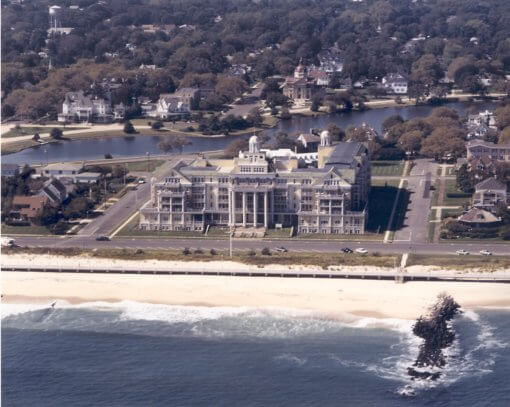
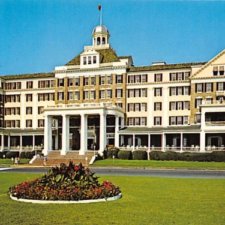
This property was constructed in 1914 as a 400-room hotel—a summer getaway for New York and Philadelphia’s elite. It served as a film set for movies such as Ragtime and The Great Gatsby. And rumor has it a few U.S. Presidents even stayed there. This project, completed in 2002, involved converting the existing structure into independent living units while maintaining its distinct ambiance and sense of history.
Key aspects of the project involved reconfiguring the site plan to readdress access and entry points. Garden Level and Terrace Level areas were designated for community spaces. Senior living amenities are always a community highlight, so spaces such as a Solarium and Multimedia Room provide a variety of social spaces. Dining venues are of particular importance, and in this case, the former Ballroom was transformed into the Main Dining Room with historical accuracy. MDP thoughtfully reflected the resort’s grandeur and detailing to maintain its signature Victorian elegance throughout the entire project.
Bentley Commons at Keene
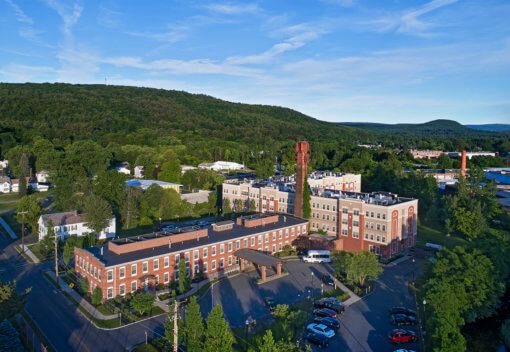
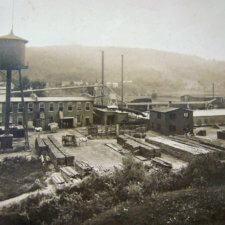
Located in the heart of downtown Keene, New Hampshire, the historic MacMillan building was renovated to become the new home of Bentley Commons at Keene. A 100-year-old mill building was completely renovated to become the centerpiece of this property.
“Another key characteristic of this community was its connection to the Keene community-at-large. They were linked by a nature trail. Just a few blocks off Main Street, Bentley Commons’ residents feel connected to the fabric of the community,” describes Hurowitz. “Conversely, many public events for the community-at-large are held at the “old mill.” This partnership between the town and the community is a hallmark of historic adaptive reuse.”
The design team approached this renovation endeavor with painstaking detail and a strong emphasis on saving the past. This effort was about being eco-friendly as well as thoughtfully nostalgic.
The original mill building was converted into the community center for this senior living community. Most of the original brick and truss work remained intact. In addition, much of the wood was reclaimed for other uses on the project. All of the elements were carefully blended to create a timeless interior design—both inspiring and inviting. This project, completed in 2008, marked a true change in thinking on the senior living model.
“The key to a successful adaptive reuse is planning,” says Hurowitz. “These types of projects can get away from you if don’t plan for contingencies along the way. These efforts are the most challenging, but in the end, the most rewarding.”
MDP is currently working with two clients on hotel conversion projects. Due to Covid, hospitality real estate is poised for new, interesting uses. The mix of units and amenity spaces allows hotels to be thoughtfully transitioned into senior living environments.
