

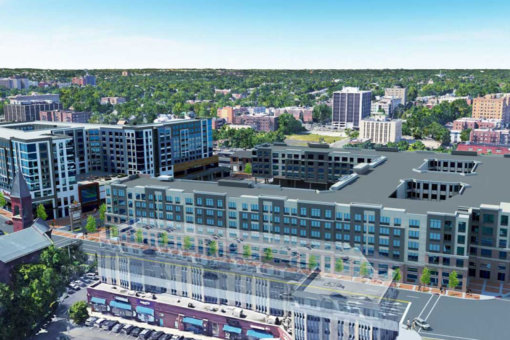
 Over the last decade, developers and city leaders across the country have been evaluating and investing in urban renewal projects to re-energize city centers. Old buildings are being transformed for new uses, pedestrian-friendly streetscapes are being introduced, and there is an influx of housing stock, retail and other mixed-use offerings to breathe a dynamic live-work-play life into areas that have become depressed. While well-intended urban renewal plans garner excitement and pave the way for thoughtful redevelopment, political agendas and investment risks can curb progress. When community goals, forward-thinking leadership and savvy development teams align, exciting things can happen. That is the story unfolding in East Orange, New Jersey with The Crossings at Brick Church Station, a multi-phased development project by Triangle Equities and Incline Capital.
MDP is excited to be a part of the project team on this new mixed-use development. The project, according to Josh Weingarten, Director of Capital Markets for Triangle Equities, a full-service New York-based real estate development firm, “was an amazing opportunity to be an economic engine. The Crossings is poised to be a catalyst for growth and job creation as well as a long-term investment to benefit the local community.”
Triangle Equities has a history of being a first mover to introduce forward-thinking projects to revitalize neighborhoods. The Crossings at Brick Station currently has three projected phases. The first two phases sit on a superblock and are both fully approved and entitled. (The third phase is positioned across the street and is too far out for approvals at this time. It is anticipated to include 300 apartments and additional retail.)
Project Details
Phase I
- 400 Apartments (80% market rate and 20% affordable)
- 85,000-sq.ft. of street-level retail including a new ShopRite supermarket
- 1,200 space parking garage
- Approximately 250 surface parking spaces
- Extensive community benefits, infrastructure improvements, and environmental remediation
Phase II
- 420 Apartments (predominantly workforce housing)
- 100,000-sq.ft. of retail and restaurants on two levels (including an anchor department store and urban food hall)
MDP spoke to Weingarten about the highlights of the Brick Church opportunity as well as important elements in urban renewal endeavors and trends in successful mixed-use community development.
MDP: What is special about the East Orange location and why is the timing right for this development project?
Weingarten: The city of East Orange is a bedroom community with an amazing train station that is a 24 minute ride from Manhattan. This transit access makes it a fantastic location to live with proximity to work in Newark or Manhattan. However, the area itself hasn’t had an economic engine since the decline of the city after WWII when the suburbs took off and malls started to open. People fled to Newark and surrounding areas and East Orange went into urban decline. There is a Main Street, but it doesn’t have the energy of a real main street. Central Avenue has some strip centers and businesses, but it doesn’t have the activity of commerce to attract people to come there to shop. It is very local.
For many decades, the city of East Orange has tried to use urban renewal plans to catalyze or foster economic development and incentivize outside capital to enter the city and invest. And it has never been successful. Mayor Ted Green came in with a pro-business attitude and mindset. Part of his agenda was to capitalize on the urban renewal plans and on something called the Transit Village, which is a designation by the state of New Jersey around certain train stations. This designation allows deeper subsidy programs to be offered to developers, like PILOTS (Payments In Lieu of Taxes) and tax abatements. The Brick Church Train Station was one of the few designated Transit Villages in the state of New Jersey.
Previous mayors didn’t see the connection between offering a significantly reduced tax payment in exchange for investment. You have to look to the future to see the increase in property values and taxes around the project. In the short term, you have to give something up and mayors had not been willing to give up the immediate cash flow. The current mayor changed the dynamic and then set the groundwork for all of the things coming together for this project.
MDP: What is notable about the financing for the project?
Weingarten: When you are a first mover there is a thesis—if you build it will people come. It is hard to finance that thesis, so we had to be very innovative with the capital. We virtually have every tax credit and bond program from the federal government to the state to the city as part of this financing. Phase I is a $230 million investment and there are 24 different sources of financing from 17 different entities to make this first phase happen.
MDP: Share your design vision for the project.
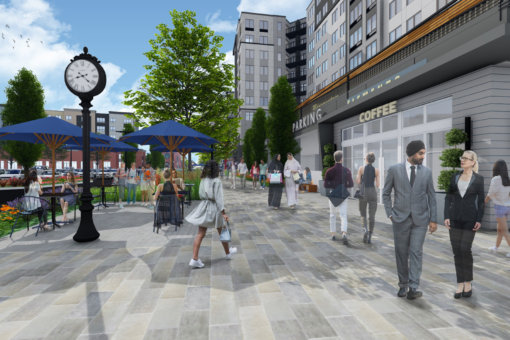
Weingarten: The site is extremely well situated locationally in the city for dense TOD development. It sits at the heart of Main Street and at the doorsteps of this train station and then you have really the only supermarket-anchored retail center in East Orange. We saw the location as an opportunity to be the doorstep of the city—the focal point of the city of East Orange. When you get off that train and exit the station this project welcomes you. It was a blank canvas for our team and an amazing opportunity to create something very special.
When the existing retail was built in 1985 it was built inside out so to speak. The retail faced inward not towards Main Street and it completely blocked the train station from Main Street. This was an opportunity to reopen the site and incorporate good urban design principles. We envisioned an urban village with a private street connecting Main Street to the train station. We wanted to line it with shops and restaurants that open up onto that street and offer outdoor seating and lots of activity. It would be anchored by ShopRite and bigger box retail to the side with residential components on the floors above. That was the design thesis from the start guiding our vision for the project.
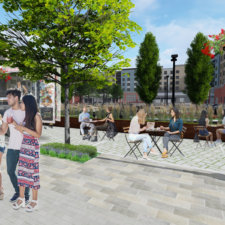
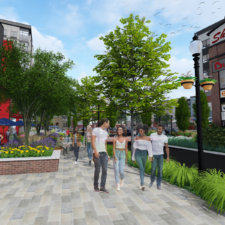
This project will include the creation of a new intersection with a main vehicular entrance to the site on Main Street. Running parallel will be a wide pedestrian promenade with lots of outdoor seating and planters. We can hold craft fairs during the holidays, etc. The promenade will bring you to a public plaza we are building with New Jersey Transit, visually and physically connecting the train station to the project.
MDP: What do you feel are key elements to the success of urban renewal projects?
Weingarten: First, I think it is important to find the balance between bringing in a new population to the city while also providing great housing opportunities for the existing population. Historically I think a lot of mayors are focused on initiatives that support their local population. Mayor Green recognized that for a project to really be scaled and have an impact you need to increase the population. You need to bring in additional people who can shop, eat and contribute to the city’s economy.
The positioning of the retail/commercial components is also important. At The Crossings, we want to leverage the success of the ShopRite supermarket, which has a fantastic name and reputation in New Jersey, to attract new retail into the city of East Orange. Not just for the residents of the project but for the city. East Orange performed a leakage study that looks at how much retail spending dollars are leaving the city. It is something in the ballpark of over a billion dollars a year of lost retail sales due to the lack of retailers within the city. So, with the increased population base, it shows you can really attract outside retailers and commercial stores to come to the site. For a project of this size, because the retail is such as large component, the success of the project is dependent on the retail income just as much as the residential.
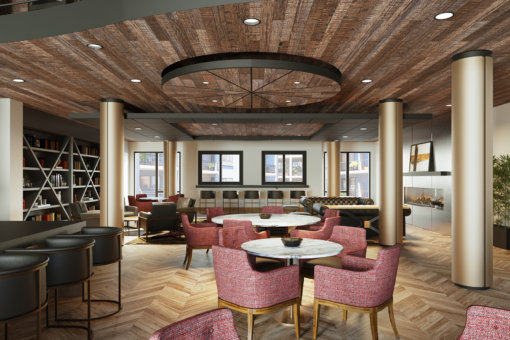 In addition, when we think about being able to attract outside residents, part of that is providing the right mix of retail and restaurants that will make this a hub of activity, a live-work-play city center. Food opportunities are huge in mixed-use and retail these days and have been for some time. Providing a lot of food opportunities is really important. At The Crossings, we have the brand new ShopRite supermarket and we are going to have a full-scale sit-down restaurant. There will be a Dunkin Donuts, ice cream shop and other opportunities in the first phase. In the second phase, we are integrating an urban food hall which is something you see more and more in cities. It brings a lot of success to retail projects because of the diverse food options. It has become something that brings people in.
In East Orange, we are applying to the federal government in partnership with Rutgers University to make our food hall an entrepreneurial incubator of restaurants. Restaurants have a high barrier of entry and are very capital intensive. The idea is that we secure federal money to build it out and set it up and then we can attract local entrepreneurs who are really focused on food but might not have the capital. Rutgers will provide an entrepreneurial training program in the business aspects of running a food business, and established restaurant owners at the Crossings will serve in a mentorship capacity. Ideally, the vendors graduate to full-scale restaurants at some point. It has the benefit of being a driver to bring people to the project while continuing to support the economic engine of the city.
MDP: From a design perspective, what are you seeing as desirable features and amenities of mixed-use projects?
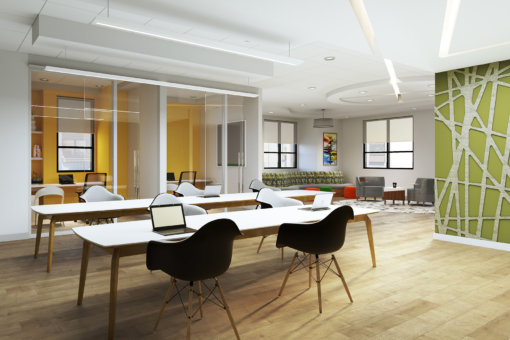
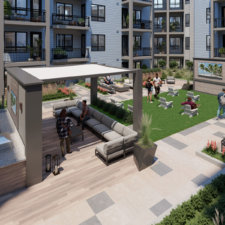
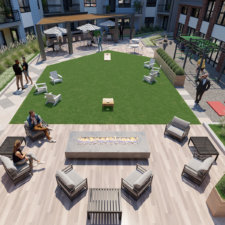
Weingarten: Working from home continues to be a big theme, so we have planned a large work-from-home space in the amenity area of the building. There will be common areas where people can gather and work as well as private suites where you can reserve space for quieter needs. There are a lot of different work-from-home opportunities throughout the building which we think is an important design trend as well as a lot of outdoor and indoor gathering spaces.
MDP: What is one of the biggest challenges of mixed-use projects?
Weingarten: One of the limiting factors in every development that we have done is parking. As much as people say cars are changing and cars are being used less, this type of TOD project still requires a lot of parking. The city of East Orange still requires one parking space per unit as a minimum parking requirement for zoning. We had made an effort early on to work with them to change the zoning, but it didn’t happen, the city and the politics just didn’t support it.
At The Crossings, we are using parking technology to allow for the maximum use of the parking spaces. We enlisted a parking consulting firm to conduct an analysis to think of all the different uses and the times of day that people would need parking. Implementing a shared parking strategy backed by technology helped us maximize the density of the development.
When you enter the structure, license plate reader technology understands if you are a resident or an employee of ShopRite, etc. so it knows where you can and cannot park. That way we can make sure the spaces at grade are available for the retail shoppers and that the residents have their spaces on the upper levels of the garage. Every space has sensors and cameras to support the license plate reader technology, this provides an added layer of security as well.
